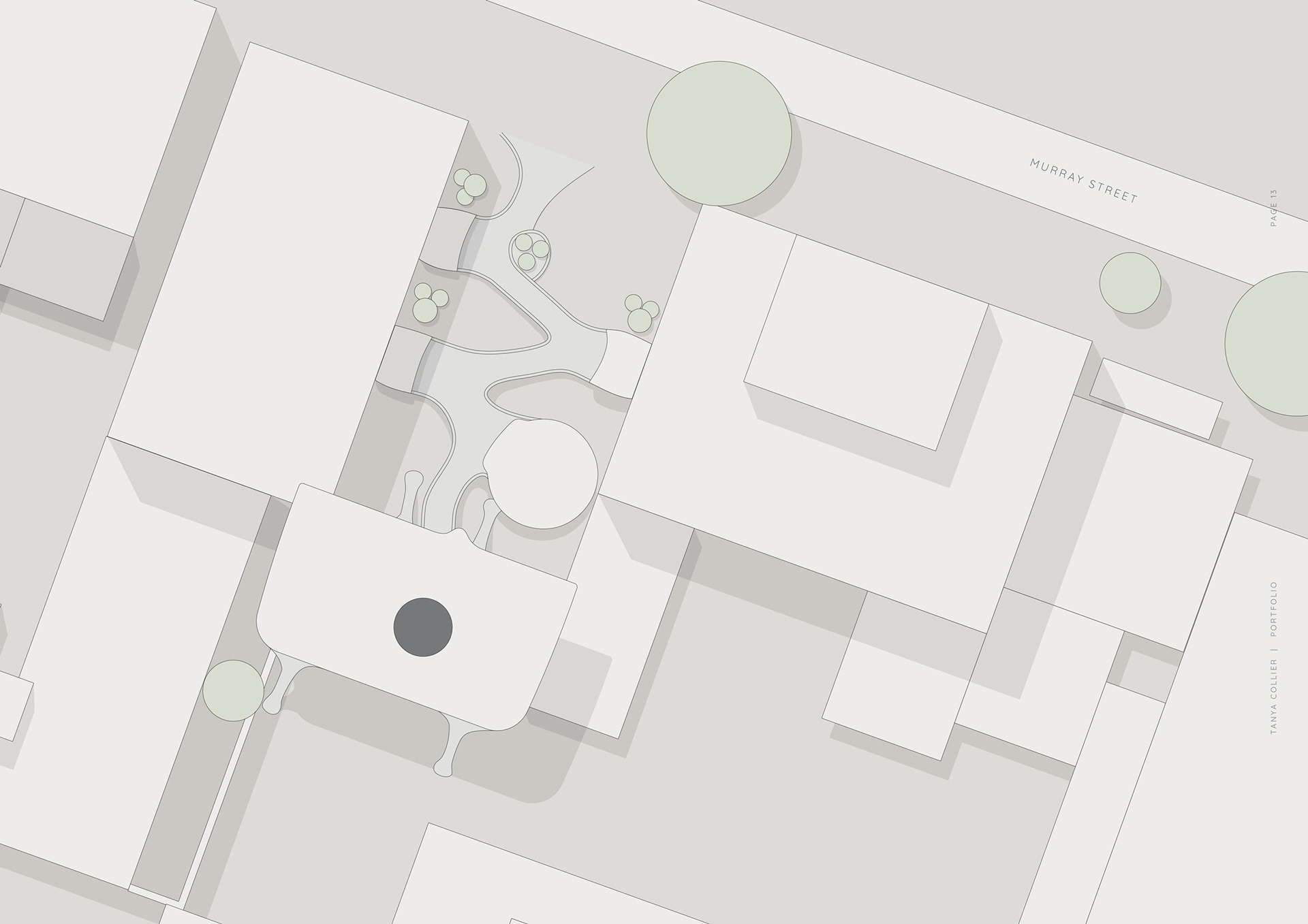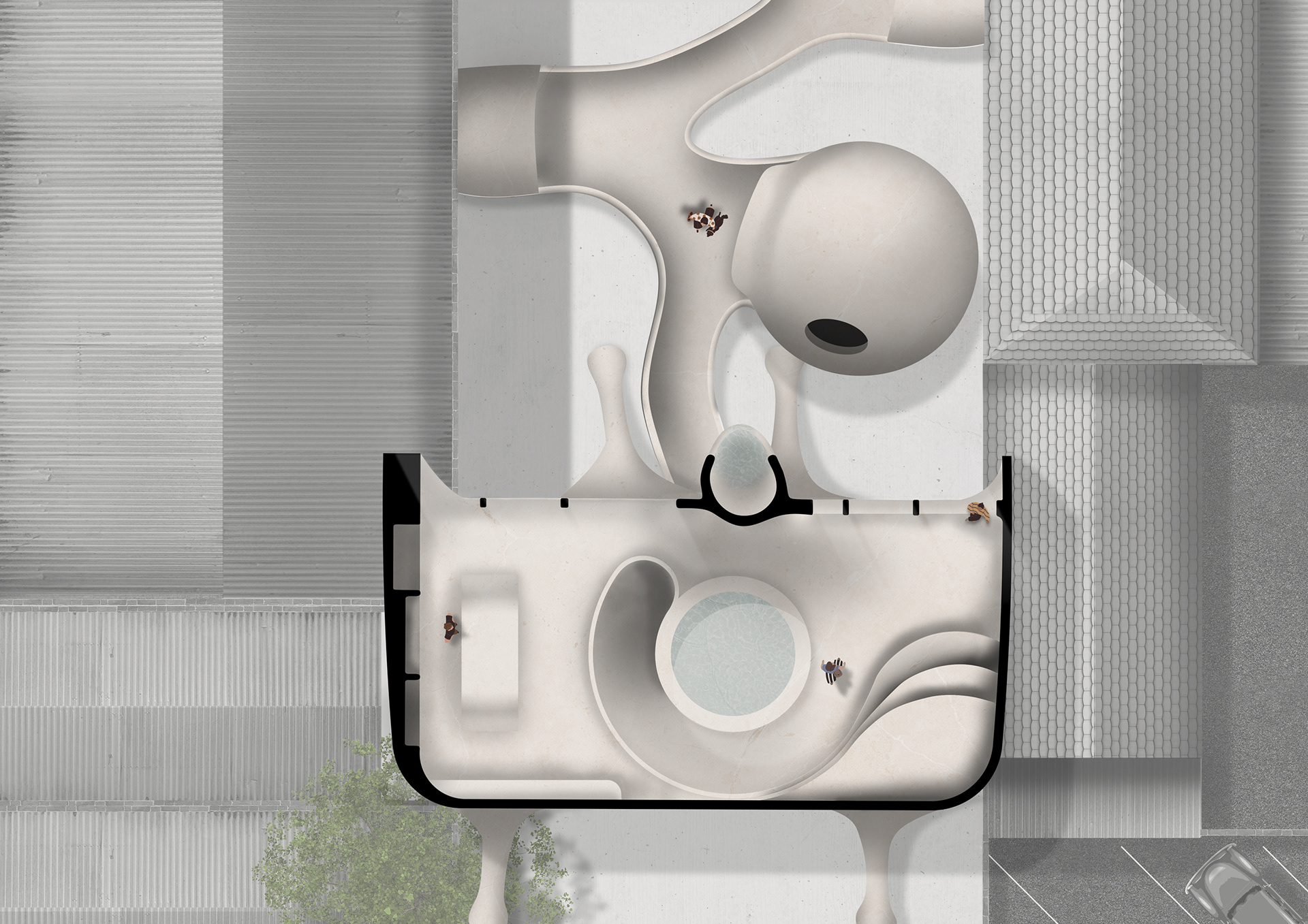
Developed as a series of interconnected public structures, the project investigated how overlooked urban spaces might support rest, exchange, nourishment, and community gathering.
Rather than monumental architecture, the proposal focused on small acts of spatial repair - creating places for pause, conversation, shelter, and collective care within the density of the city.
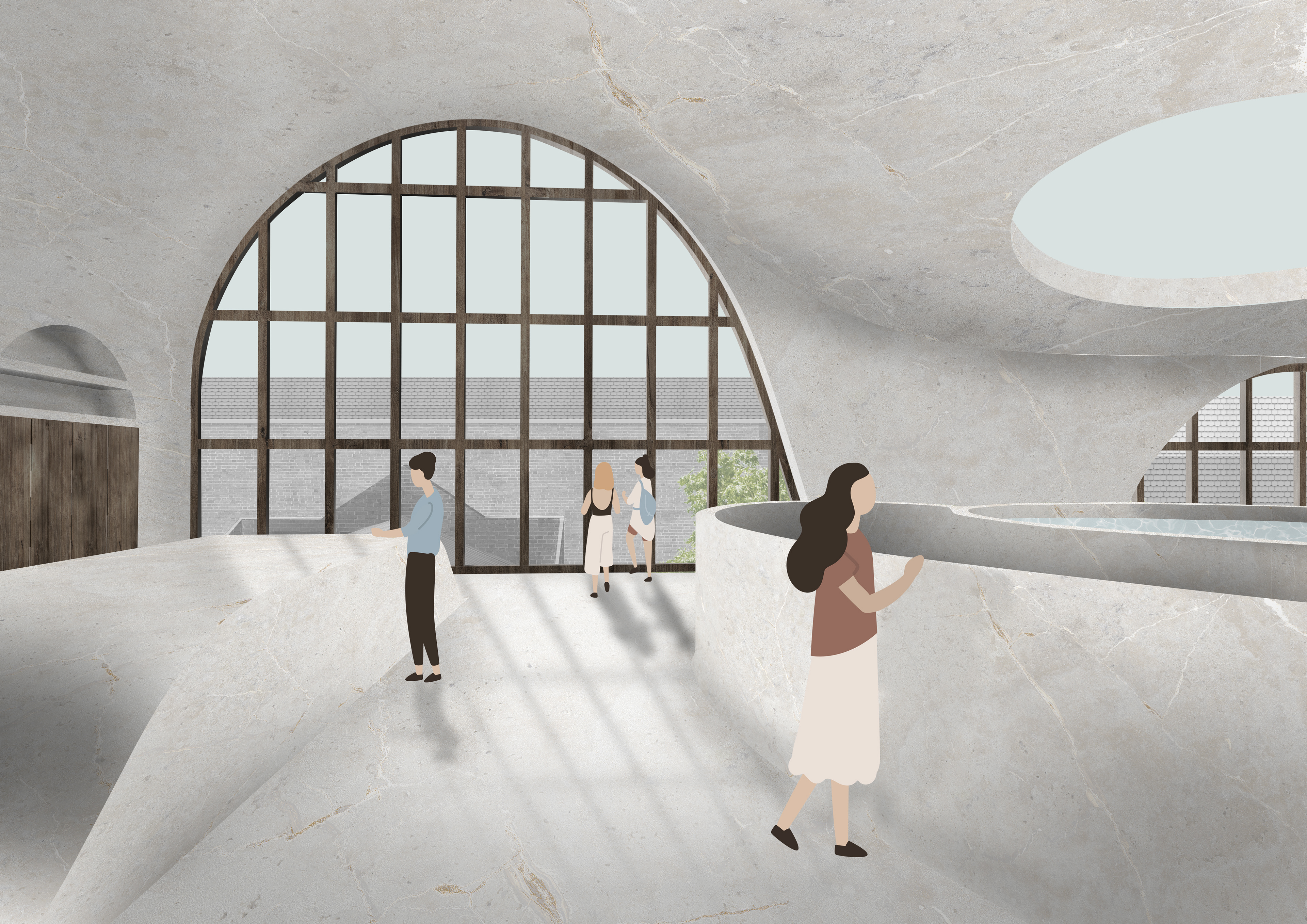
Soft forms, porous thresholds, and shared communal programs were used to encourage informal occupation and emotional comfort, particularly for people experiencing social isolation or housing insecurity.
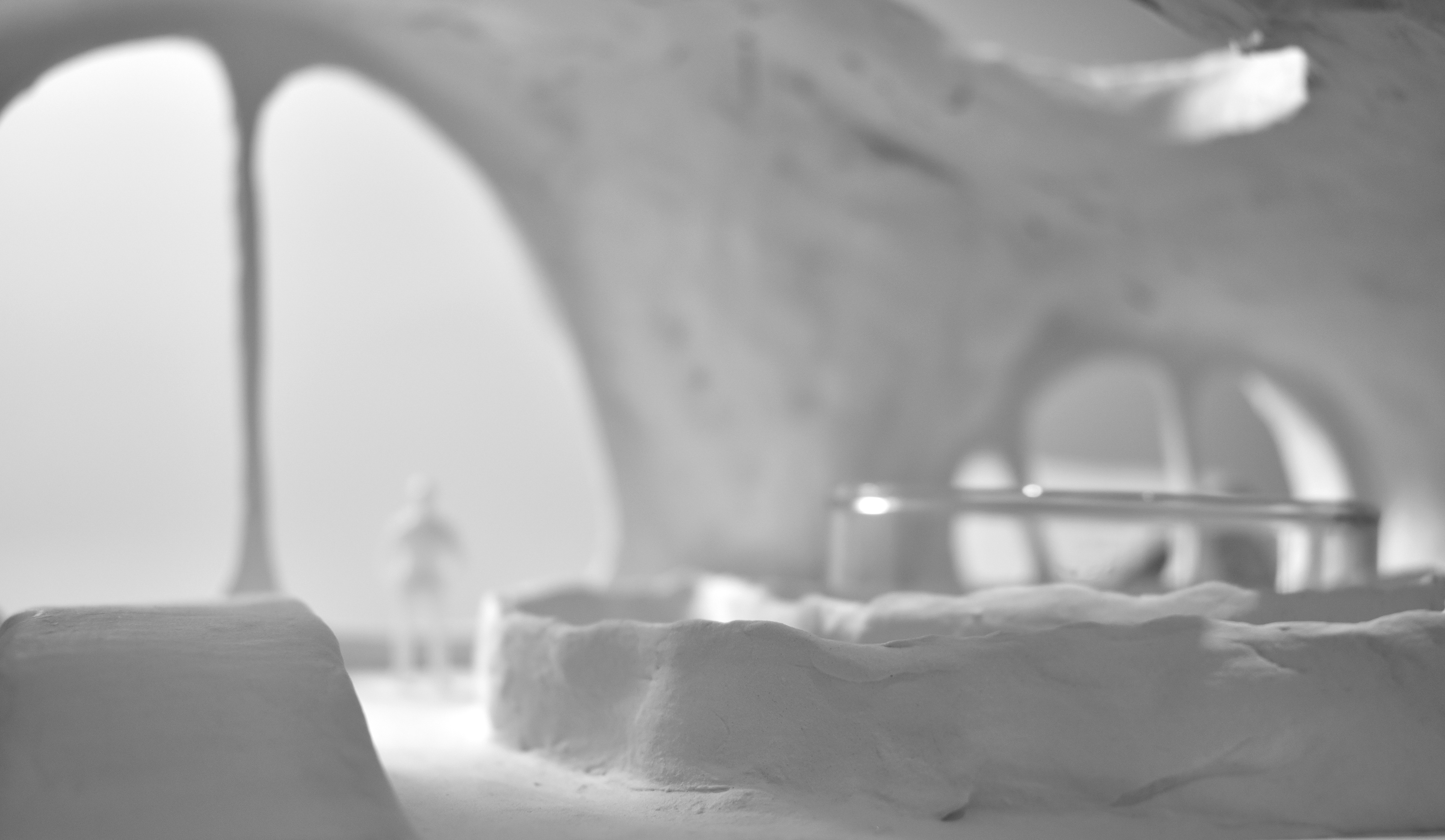
The project combined speculative spatial thinking with physical model-making and atmospheric representation to explore architecture as a tool for social connection.